Exo 16:25-17:16
Exodus 16:25-36
-
to/for YHWH = la-YHWH (לַיהוָה)
- the preposition lamed (לְ)
- In Biblical Hebrew commonly indicates:
- Direction or dedication (“to,” “for,” “unto,” “belonging to”).
- Purpose or benefit (“for the sake of,” dedicated in service to).
- Possession/relationship (“of” in the sense of belonging).
- it marks the Sabbath as consecrated to YHWH — a day when the people rest as an act of obedience, worship, and covenant relationship with Him
- In Biblical Hebrew commonly indicates:
- the preposition lamed (לְ)
-
V 4: Then Yahweh said to Moses, "Behold, I will rain bread from the sky for you, and the people shall go out and gather a day's portion every day, that I may test them, whether they will walk in my law or not.
- "Eat that today
- for today is a Sabbath
- to Yahweh.
- Today you shall not find it in the field.
- for today is a Sabbath
- Six days you shall gather it,
- but on the seventh day is the Sabbath.
- In it there shall be none."
- some of the people went out to gather,
- and they found none.
- but on the seventh day is the Sabbath.
- Yahweh said to Moses, "How long do you refuse
- because Yahweh has given you the Sabbath
- therefore he gives you on the sixth day the bread of two days
- "Eat that today
-
v 19: Moses said to them, “Let no one leave of it until the morning, they didn’t listen, so it bred worms and became foul
- v 23 on Sabbath day: Moses said to them, "all that remains over lay up for yourselves to be kept until the morning." And it didn’t become foul, and there were no worms in it.
-
v 31: "Manna",
- like coriander seed,
- dried, aromatic fruits of the cilantro plant
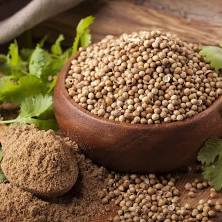
- white;
- taste was like wafers with honey.
- tsaphihit (צְפִיחִת) - wafer, thin cake, flat wafer
- It refers to a thin, crisp, honey-sweetened baked good
- Exodus 16:4 - rain bread from heaven and Exodus 16:15 this is the bread
- lechem often functions as a generic term for any edible nourishment needed for daily life, not strictly literal bread
- like coriander seed,
-
v 32: Let an omer-full of it be kept throughout your generations,
- that they may see the bread with which I fed you in the wilderness,
- lay it up before Yahweh
- Aaron laid it up before the Testimony
- This is the first mention of the Testimony
- Common to biblical narrative: later terms or objects are referenced early when the story is written or compiled from a later perspective (Moses writing after the events).
- The manna jar was eventually placed inside the completed Ark alongside the tablets (Hebrews 9:4 confirms this).
-
ate the manna forty years,
- until they came to an inhabited land.
- until they came to the borders of the land of Canaan.
Thoughts:
- We wish that we had died by Yahweh’s hand in the land of Egypt
- When we ate our fill of bread, - In the morning when manna fell:
- you shall see Yahweh’s glory; because he hears your murmurings against Yahweh
- bread to satisfy you, because Yahweh hears your murmurings which you murmur against him
- you shall be filled with bread. Then you will know that I am Yahweh your God.’
- When we sat by the meat pots - In the evening when the quail fell:
- you shall know that Yahweh has brought you out from the land of Egypt
- Yahweh will give you meat to eat
- you shall eat meat
- Wondering about the quail ...
- It seems the quail was a one time event in that one evening - it isn't mentioned as being eaten for the forty years.
- It reappears in Numbers 11:4-6, 31-34 — A second, much larger provision of quail due to the people’s craving for meat; they ate excessively, leading to a plague.
- When we ate our fill of bread, - In the morning when manna fell:
- Daily bread - it feels like we have taken this bread conept to a literal understanding and lost the literal meaning. When a Hebrew heard the word lechem - they didn't think of a loaf - they understood it to mean life - with out the provision, there was death. Give us this day our LIFE (daily bread). To change our mindset maybe we should start saying what the Hebrew would have heard - LIFE. Manna = life, bread = life.
- 02 The Seventh Day Rest was for Them (02 Exod 16)
Exodus 17:1-16
- starting according to Yahweh's commandment = pi (פִּי) according to the mouth of. Hebrew #idiom to mean “command,” “order,” or “instruction” (i.e., what comes from the mouth).
- Travels - Numbers 33:12-14 Wilderness of Sin - Dophkah - Alush - Rephidim
- Modern scholarly and archaeological route estimates 19–31 miles
- Traveling through narrow valleys and more rugged/hilly terrain
- there was no water for the people to drink - the people quarreled with Moses - Why do you quarrel with me - Why have you brought us up out of Egypt, to kill us //quarrel = vayyarev (וַיָּרֶב) “strive, quarrel, be in contention” and even “litigation". The people have a legal dispute—they are contending with Moses as if bringing a lawsuit.//
- Exodus 15:22 - and they went three days in the wilderness, and found no water, people murmured against Moses
- Exodus 16:17 - Who are we, that you murmur against us
- Exodus 16:3 - brought us out into this wilderness to kill
- Tomorrow I will stand on the top of the hill with God's rod in my hand
- Exodus 14:16 - lift up your staff and extend your hand toward the sea and divide it,
- Moses stretched out his hand toward the sea, and the Lord drove the sea apart
- Write this for a memorial in a book (It is the first time in the Bible that God explicitly commands something to be written in a sefer (scroll, record, document))
- rehearse it in the ears of Joshua:
- that I will utterly blot out the memory of Amalek from under the sky
- Yahweh will have war with Amalek from generation to generation
- rehearse it in the ears of Joshua:
Notes:
- Striking the rock -striking the rock recalled striking the Nile; there it brought death to Egypt, but here it brought life to Israel.
- Paul links to the provisions of the Messiah 1 Cor 10:4
- Blotting out of Amalek and the Amalekites
- Deuteronomy 25:17-19 — Commands Israel to “blot out the remembrance of Amalek” once they are settled in the land.
- 1 Samuel 15 — King Saul is commanded to destroy the Amalekites completely, but he fails (spares King Agag and livestock). Samuel then executes Agag.
- 1 Chronicles 4:43 — In the days of King Hezekiah, the last remnant of Amalek is destroyed by the Simeonites
- No other ancient Near Eastern inscriptions, tablets, or manuscripts outside the Bible mention the Amalekites by name in a way that clearly corresponds to the biblical group.
Isa 58:13-14
John 6:1-71
- Our fathers ate the manna in the wilderness. As it is written, 'He gave them bread //lechem// out of Heaven to eat.'"
- For the bread of God is that
- which comes down out of heaven
- and gives life to the world.”
- Jesus said to them, “I am the bread of life.
- Whoever comes to me
- will not be hungry,
- and whoever believes in me
- will never be thirsty.
- But I told you that you have seen me,
- and yet you don’t believe.
- All those whom the Father gives me
- will come to me.
- He who comes to me
- I will in no way throw out.
- They will all be taught by God.’ Therefore everyone who hears from the Father and has learned, comes to me.
- He said, “For this cause I have said to you that no one can come to me, unless it is given to him by my Father.”
- For I have
- come down from heaven,
- not to do my own will,
- but the will of him who sent me.
- all he has given to me I should lose nothing
- that everyone who
- sees the Son
- and believes in him
- should have eternal life
- No one can come to me unless the Father who sent me draws him
- but the will of him who sent me.
- I will raise him up in the last day
- he who believes in me has eternal life
- not to do my own will,
- come down from heaven,
- Whoever comes to me
- This is the bread which
- comes down out of heaven,
- that anyone may eat of it and not die
- Your fathers ate the manna in the wilderness and they died
- that anyone may eat of it and not die
- I am the living bread which came down out of heaven.
- If anyone eats of this bread,
- he will live forever.
- Yes, the bread which I will give for the life of the world
- is my flesh. (sarx (σάρξ) flesh, meat, body, physical nature, human nature)
- unless you eat the flesh of the Son of Man
- and drink his blood,
- you don’t have life in yourselves
- He who eats my flesh and drinks my blood //symbolic element//
- has eternal life,
- and I will raise him up at the last day.
- For my flesh
- is food indeed,
- and my blood
- is drink indeed
- he who feeds on me
- will also live
- because of me
- will also live
- is my flesh. (sarx (σάρξ) flesh, meat, body, physical nature, human nature)
- This is the bread
- which came down out of heaven
- —not as our fathers ate the manna and died.
- He who eats this bread will live forever.”
- which came down out of heaven
- If anyone eats of this bread,
- It is the spirit who gives life.
- The flesh profits nothing.
- The words that I speak to you are spirit, and are life.
- comes down out of heaven,
- Jews therefore murmured concerning him
- Don’t murmur among yourselves
- For the bread of God is that
Notes:
- Sea of Tiberias = Sea of Galilee
- Two "manna" feedings flash back to Exodus but John's is referring to the first in chronological order. Also recorded in Matthew 14, Mark 6, Luke 9. Second in Matthew 15:32-39 and Mark 8:1-10.
- Don't work for the food which perishes, but for the food which remains to eternal life
- If they tried to keep extra food on any day but the sixth, it would perish.
- In Exodus they did no work on the seventh day yet received the life (bread).
- Raise them up = resurrect or make live again
- Eats flesh and drinks blood = looks on the Son and believes in him
- Draws him = used of pulling or dragging, often by force.
Psalm 53
Connections
Numbers 11 - Manna and Quail
Two separate events roughly one year apart in the biblical timeline.
Exodus 16 (Early Wilderness – Before Sinai)
- Timing: 15th day of the 2nd month after leaving Egypt (Exodus 16:1) — very early in the journey, still in the Wilderness of Sin.
- Context: People complain about hunger shortly after the Red Sea crossing and bitter waters at Marah.
- Provision:
- Quail in the evening (one-time mention).
- Manna begins the next morning as daily bread.
- Tone: God graciously provides both as an introduction to His care; no punishment recorded here.
- Outcome: Manna becomes the regular daily food for the next 40 years (Exodus 16:35).
| file.inlinks |
|---|