Beast
Define
- Hebrew: chayyah (חַיָּה) – “beast, living creature, wild animal” (used in Daniel 7 for the four beasts); in modern Hebrew translations of Revelation, usually tannin (תַּנִּין) or simply ha-chayyah (הַחַיָּה) with the article “the beast.”
- Greek: thērion (θηρίον) – “wild beast, dangerous animal” (used 38 times in Revelation for the end-time figure, e.g., Rev 13:1, 11, 14, 15, 17, 18; 19:19–20; 20:10).
Beasts
First Beast -
Revelation 13:1-10
- Comes up out of the sea
- Ten (10) horns
- Ten crowns on the horns
- Seven heads
- Blasphemous names on his (07) heads
- One head looked like it had been fatally wounded - but healed
- Sword wound and lived (Revelation 13:14)
- Like a leopard
- Feet like a bear
- Mouth like a lion
- Speaking great things
- Blasphemy was given to him, against
- ton Theon/Elohim
- name Shem
- Tabernacle Mishkan
- Those who dwell in Heaven
- Dragon gives the best the dragon's power, dragon's throne, and dragon's authority
- The whole earth marvels at the beast
- They worship the dragon because he gave his authority to the beast
- They worship the beast
- Who is like the beast?
- Who is able to make war with him?”
- All who dwell on the earth will worship him,
- Everyone whose name has not been written from the foundation of the world in the book of life of The Lamb who has been killed.
Second Beast - False Prophet
Revelation 13:11-18
- Comes up out of the earth
- Two (2 ) horns like a lamb
- Speaking like a Dragon
- Exercise all authority of the first beast in his presence
- Makes the earth worship the first beast
- Makes those who dwell in the Earth worship the first beast
- Preforms great signs
- fire come down out of the sky to the earth
- in the sight of the people
- Deceives Elohim's own people
- who dwell on the earth
- tells them to make an image to the first beast
- It is given to the second beast to give breath to the image of the beast
- tells them to make an image to the first beast
- because of the signs he was granted to do
- in front of the beast (first beast)
- who dwell on the earth
- Causes all to be given marks on their right hands and on their foreheads
- small and great
- rich and poor
- free and slave
- The mark
- No one able to buy or to sell without the mark
- the name of the beast
- or the number of his name
- He who has understanding calculate the number of the beast (second)
- it is the number of a man
- his number is six hundred sixty-six Earliest Manuscript Papyrus 47
- He who has understanding calculate the number of the beast (second)
Image of the Beast (Revelation 13:15)
- Speaks
- Causes as many as wouldn't worth the image to be killed
Related words
- Antichrist (conceptually identified by most interpreters, though the exact term ἀντίχριστος never appears in Revelation)
- False Prophet
- The man of lawlessness / son of destruction (2 Thess 2:3–8)
- The little horn (Daniel 7:8, 20–21)
- The coming prince / the prince who is to come (Daniel 9:26–27)
- The Abomination of the Desolation (Daniel 11:31; 12:11; Matt 24:15)
Additional Info
- Two main “beasts” appear in Revelation 13:
- The beast from the sea (Rev 13:1–10) – the primary political/military Antichrist figure with seven heads, ten horns, and blasphemous names.
- The beast from the earth / false prophet (Rev 13:11–18) – exercises the first beast’s authority, enforces the mark, and performs signs.
- The sea-beast is the one explicitly called “the beast” throughout the rest of Revelation (Rev 16:13; 17:3–17; 19:19–20; 20:10) and is thrown alive into the lake of fire at Christ’s return (Rev 19:20).
My Additional notes
Source: Wisdom in Torah Video)
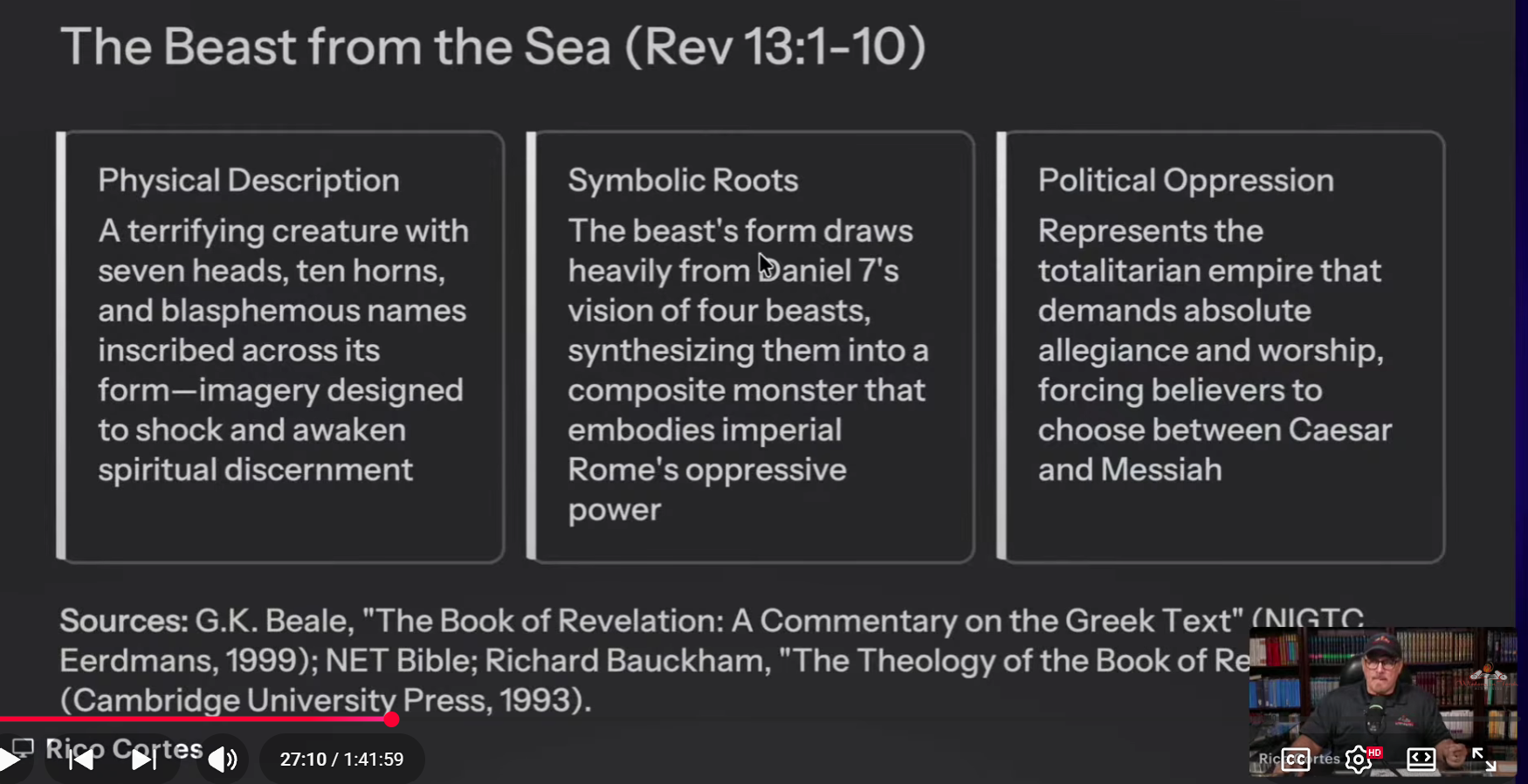
- JK Beiel identified the seven head with both the seven hills upon which Rome was famously built and a secession of seven Roman emperors who claim divine status.
- There is a fragment of basically a beast with seven heads. It was actually from the Canaanite period. It goes to show you that the imagery of a beast with seven heads was already prevalent in the ancient world. it just carried over because the writer in this case John he's trying to uh send in metaphor and imagery of something that the people already would have understood.
- The 10 horns according to Bo represent vassal kings or regional rulers who derive their authority from Rome and form a coalition of power aligned with the empire's interest.
- The names of blasphemy inscribed on the beast points directly to Caesar to the Caesar cult imperial worship. The emperors who proclaimed themselves divine demanded worship and claimed titles belonging to God alone.
- Not to do anything away with believing that there will be a great tribulation. It will be and by the way all of this stuff in its form will be repeating itself. It will be repeating itself.
- When the book of revelation mentions the sea and the land that a beast from chaos comes out of the sea to land and that the beast will have dominion over it and then later on that Malik that the messenger will have dominion over with the sea and the land.
- The mark placed on the right hand and forehead symbolizes visible identification with the beast system, a public declaration of loyalty that determines one's place in society.
- This imagery reflects actual Roman practices including loyalty oath and imperial seals and documents and participation in emperor worship as prerequisite for commerce and civic life. This imagery reflects authentic pressures facing the early believers and guilt memberships requiring pagan sacrifices, businesses partnership demanding emperor worship participation and civic ceremonies excluding Christian conscience. The mark system symbolized the broader spiritual reality of compromise and apostasy. the temptation to accommodate to idolatry for economic survival or social acceptance. This will happen again.
Connections
- The dragon (Satan) who gives the beast his power, throne, and great authority (Rev 13:2, 4)
- The woman / Babylon who rides the scarlet beast (Rev 17:3–6)
- The ten horns/kings who give their power to the beast (Rev 17:12–13)
- The false prophet / second beast who causes the world to worship the first beast and receive its mark (Rev 13:11–17; 19:20)
- The image of the beast that is given breath and kills those who refuse to worship it (Rev 13:14–15)
- The number 666 – “the number of the beast … the number of a man” (Rev 13:18)