Ahaziah (grandson, king of Judah via daughter-in-law, 2 Kgs 8:26)
Land and Dwelling
Dwelling Places
Samaria (purchased hill from Shemer, built capital; 1 Kgs 16:24)
Tirzah (initial royal city before Samaria; 1 Kgs 16:23)
Journeys
From army camp at Gibbethon to Tirzah to seize throne (1 Kgs 16:15–17)
To hill of Samaria to buy and build (1 Kgs 16:24)
Military
Captain of Israel’s army under King Elah (1 Kgs 16:16)
Led siege against Zimri in Tirzah (1 Kgs 16:17)
Proclaimed king by the army at Gibbethon (1 Kgs 16:16)
Medical and Death
Righteousness and Unrighteousness
Righteousness
Unrighteousness
Did worse than all kings before him (1 Kgs 16:25)
Walked in the sins of Jeroboam (golden calves, idolatry; 1 Kgs 16:26)
Statutes of Omri = institutionalized evil (Micah 6:16)
Other
Founded dynasty (Omride dynasty; 1 Kgs 16:27)
Samaria named after Shemer (1 Kgs 16:24)
Extra Biblical Information
Landmarks:
Archeology:
Corroborates 2 Kings 3 (Moab's revolt after Ahab's death) but omits specifics like battles.
Basalt inscription erected by Mesha, king of Moab (ca. 840 BCE), discovered in 1868 at Dhiban (biblical Dibon), Moab. Now in the Louvre Museum.
Lines 4–8: "Omri was king of Israel, and he oppressed Moab many days, for Chemosh (Moab's god) was angry with his land. And his son followed in his footsteps, and he also said: 'I will oppress Moab.' In my days he spoke, but I triumphed over his house. And Israel perished forever... Omri took possession of the whole land of Medeba, and lived there in his days and half the days of his son—forty years."
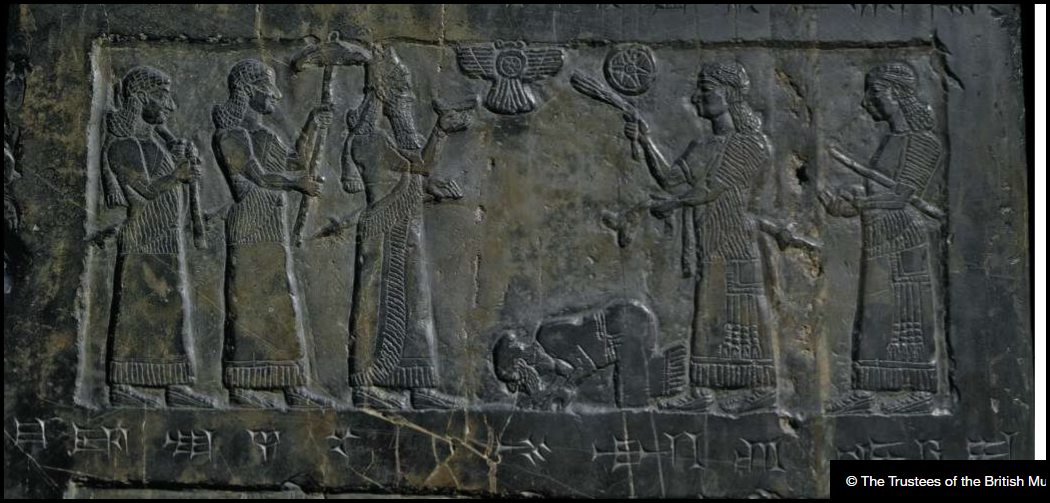
Black limestone obelisk from Nimrud (ancient Kalhu, Iraq), now in the British Museum. Records 31 years of Shalmaneser's reign, with reliefs of tribute scenes.
Second register (ca. 841 BCE): Relief depicts "Jehu, son of Omri" (Ia-ua mar Humri) bowing and paying tribute (silver, gold, vessels, spears). Israel is called "House of Omri" (Bit-Humri).
Earlier annals (integrated text) reference the Qarqar campaign against Ahab (as in Kurkh).
"Son of Omri" uses "son" genealogically for Jehu (not literal son of Omri, but of the dynasty). Illustrates the enduring "House of Omri" as a vassal power post-Ahab. Focuses on tribute (a "work" of submission), not statutes or idolatry.
Assyrian kings (e.g., Tiglath-Pileser III, ca. 734 BCE) repeatedly call Israel "House of Omri" (Bit-Humri) in later texts, indicating the dynasty's lasting label for ~150 years.
lack limestone obelisk of Shalmaneser III; glorifies achievements of king and minister; inscription; illustrations show tribute from all directions; tribute bearers in five rows, identified by captions; each row has four panels, one on each side of the obelisk; 1. Gilzanu (North West Iran) tribute includes horses; 2. House of Omri (Ancient Israel- tribute from Biblical King Jehu 841BC); 3. Musri, or Egypt tribute or gift of elephant, ape and other exotic animals; 4. Suhi on the Euphrates, scene of animal hunting; 5. Patina in Southern Turkey.
Tribute of Jeru bowing at Shalmanesar's feet
The divine symbols of the god Shamash (the winged disk) and the goddess Ishtar (the star) hover above the scene. It
Cuneiform translation: "The tribute of Jehu, son of Omri: I received from him silver, gold, a golden bowl..."