City of Nahor
located in Aram-naharaim which is a biblical name for Mesopotamia or Syria of the two rivers, the area between the Tigris and Euphrates rivers
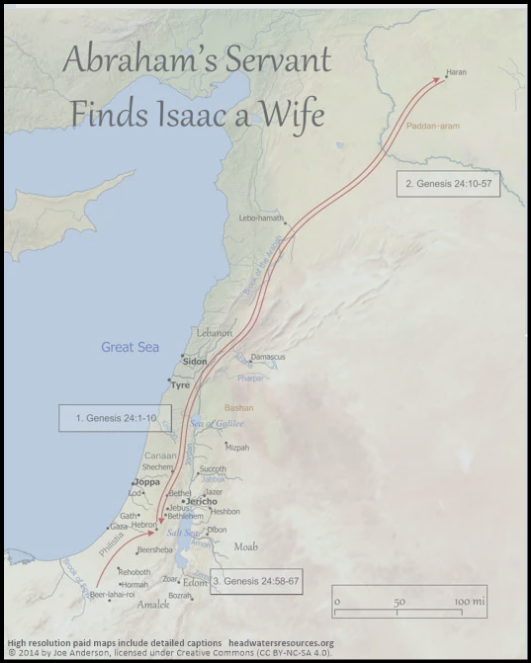
The name “Nahor” in this context is linked to Abraham’s brother, Nahor II, son of Terah, who is mentioned in Genesis 11:26–29. Nahor II is part of the patriarchal genealogy, and his family plays a key role in the story, as his granddaughter Rebekah becomes Isaac’s wife. The “city of Nahor” is generally understood to be the place where Nahor’s family settled, likely in the region of Harran (or Haran), in what is now southeastern Turkey.
Aram Naharaim and Regional Context:The city of Nahor is located in Aram Naharaim, a region meaning “Aram of the two rivers” (likely the Euphrates and one of its tributaries, such as the Balikh or Habur). This area, in modern southeastern Turkey, was part of the broader Fertile Crescent and a hub for Semitic tribes, including the Arameans.
Archaeological and historical records, such as those from the Mari archives (18th century BCE), mention a city called Nahur or Naḥiri in the Balikh Valley, which some scholars associate with the biblical “city of Nahor.” This city was a regional capital and trade hub, suggesting it was an established settlement long before Nahor’s time. If this is the same place, Nahor’s family may have settled there rather than founding it anew
The region of Aram Naharaim was home to West Semitic tribes, including the Arameans, who became prominent in the late second millennium BCE. The genealogy of Nahor’s descendants in Genesis 22:20–24 is seen by some scholars as reflecting the tribal and geographical expansion of these groups. The city of Nahor may have been a center for Nahor’s clan, which intermarried with Abraham’s line, as seen in the marriage of Isaac and Rebekah
Gen-24: The travel time for Abraham's servant from Canaan to the city of Nahor (Haran) was roughly three to four weeks, covering a distance of approximately 600-700 miles by camel, which is about 25-30 miles per day. This journey was considered long and significant in biblical times.
Connections
| file.inlinks |
|---|