Red Sea
Location:
- Biblical: Yam Suph (יַם־סוּף) - Sea of Reeds / Reed Sea (in Exodus 10:19, the west wind casts the locusts into Yam Suph / the sea)
- In ancient times the name applied to a much larger body of water, including the Arabian Sea and the Persian Gulf (C. Houtman, Exodus, 1:109-10). See also Num 14:25; 21:4; Deut 1:40; 2:1; Judg 11:16; 1 Kgs 9:26; Jer 49:21.
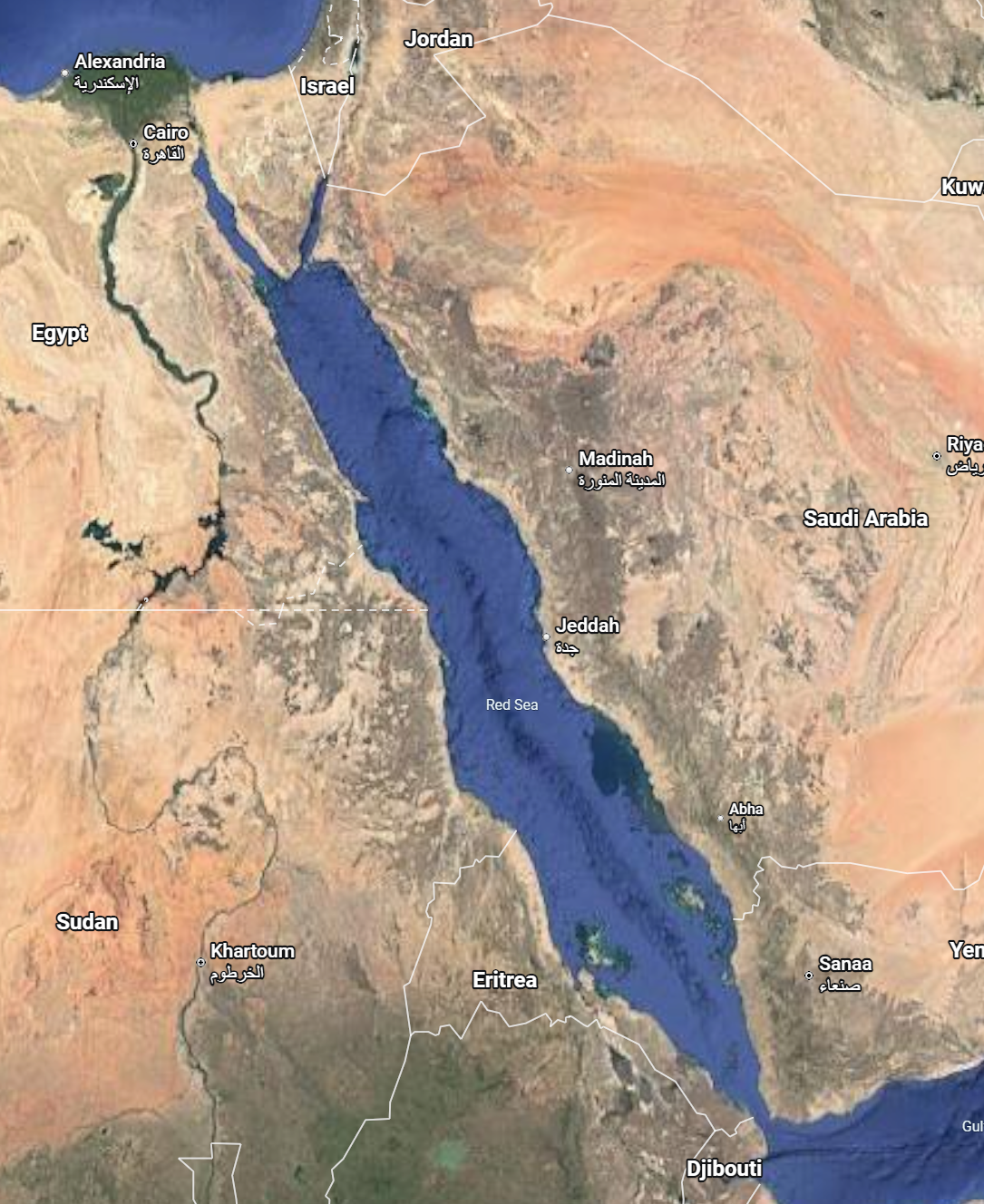
- Modern Location: Red Sea (traditional identification; often the Gulf of Suez or broader Red Sea area; some views suggest a reedy lake near Egypt)
- The name Red Sea is currently applied to the sea west of the Arabian Peninsula. The northern fingers of this body of water extend along the west and east sides of the Sinai Peninsula and are presently called the Gulf of Suez and the Gulf of Aqaba or the Gulf of Eilat.
Significance:
- First mention: Exodus 10:19 (the locusts are cast into Yam Suph by the strong west wind)
- Last mention: 1 Kings 9:26 (Solomon's navy at Ezion-geber on the shore of Yam Suph / the Red Sea; or in some counts Nehemiah 9:9 or Psalms)
- Symbolic: Deliverance and God's judgment (locusts removed into it as reversal of plague; foreshadows greater deliverance at the crossing in Exodus 14-15, symbolizing salvation, God's power over chaos/nature, and redemption from enemies)
- Major Events: Locusts of the eighth plague cast into it and destroyed (Exodus 10:19); Israelites cross it miraculously (Exodus 14-15); Pharaoh's army drowned in it; Israelites camp by it in wilderness wanderings (Numbers 33:10-11); border/reference point in journeys and conquests
People
- Moses (prays, leads Israel past/through related events; involved in locust plague removal)
- Pharaoh (plague context leading to removal into Yam Suph)
- Israelites (witness plague removal; later cross it in exodus)
https://www.google.com/maps/search/Red Sea%2C Egypt
Connections
| file.inlinks |
|---|